TDCCommerce makes purchasing management more efficient by streamlining how purchase orders are created, tracked, and fulfilled across teams. With full visibility into what’s been ordered, expected delivery dates, and item quantities, businesses can maintain optimal inventory levels and reduce stockouts or overstocking. Suppliers stay informed and aligned through timely updates and transparent communication, resulting in smoother transactions and fewer delays in the supply chain.
.png&w=3840&q=75)
TDCCommerce simplifies how employees request goods or services by automating the purchase requisition process. Each request is recorded as a formal transaction, ensuring all purchasing activity aligns with company standards for quality and cost control. Organizations can enforce approval requirements to review requests before moving forward. Once approved, the request seamlessly converts into a purchase order, maintaining a smooth and compliant workflow from start to finish.
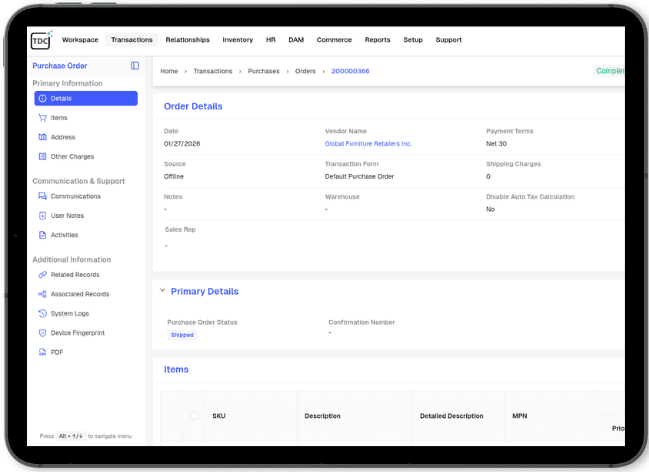
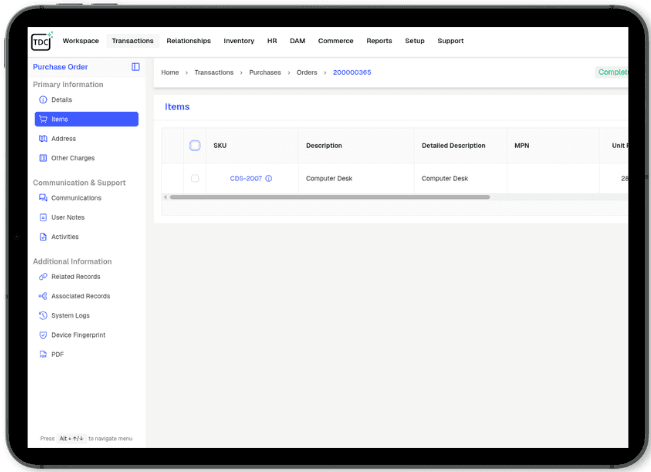
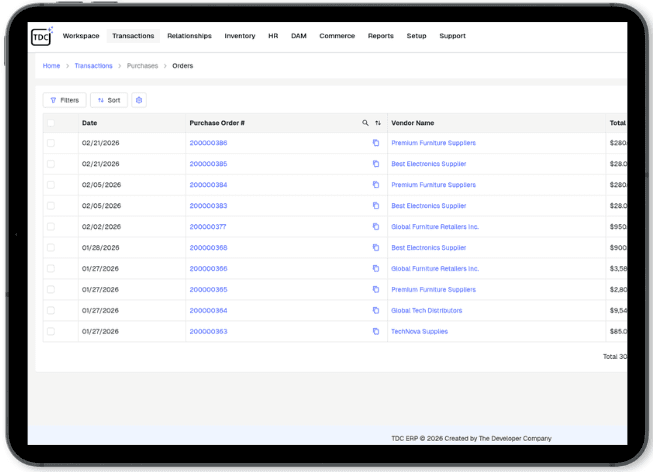
TDCCommerce’s purchase order management simplifies how businesses track and fulfill item replenishment needs. Whether orders stem from planning tools, blanket agreements, or reorder thresholds, all can be managed through a single, intuitive interface. The system supports mixed-item POs—including inventory, services, and expenses—on a single order, with contract-based pricing applied automatically when relevant. Customizable reminders help users stay on top of expected deliveries, while streamlined order lists automate routine steps and speed up the overall purchasing workflow.
TDCCommerce enables organizations to set up customized approval paths that align with internal policies and department structures. Approvals can be restricted by role, department, or spending limits, ensuring requests are reviewed by the right individuals. Automated notifications alert approvers to pending requests, and backup approvers can be designated to prevent delays. Approval rules can be as simple as a dollar limit or as advanced as incorporating factors like budget thresholds, item categories, project assignments, or geographic locations—supporting fast, accurate purchasing decisions without compromising control.
TDCCommerce enforces structured approval workflows to ensure that every purchase request is reviewed and authorized before it becomes a purchase order, helping teams avoid unplanned or off-policy spending.
All required details—such as item descriptions, quantities, and pricing—are captured during the purchase request stage. Once approved, the request seamlessly converts into a PO, reducing errors and ensuring suppliers receive precise instructions.
By automating the purchasing process, TDCCommerce reduces the need for manual input, freeing up buyers to focus on strategic tasks while also speeding up the entire order cycle.
Every purchase order serves as a formal agreement between the business and the supplier. In case of delivery issues or pricing errors, the PO provides a clear reference point for resolving discrepancies quickly and fairly.
TDCCommerce gives finance and procurement teams better control over budgets by enforcing structured approval workflows. This prevents off-contract or unnecessary purchases while offering full visibility into where money is being spent.
With a formalized request-to-order process, everyone involved—from the initial requester to the buyer and supplier—receives clear, consistent information, reducing the risk of errors or misinterpretation.
Purchase requests are automatically routed through the required approval stages, with built-in alerts and reminders to keep things moving. This speeds up decision-making while ensuring policy compliance.
TDCCommerce streamlines purchasing by centralizing PO creation, tracking, and fulfillment—improving inventory control and supplier coordination for a smoother, more efficient supply chain.
TDCCommerce Procurement streamlines purchasing by directing orders to approved suppliers, centralizing vendor interactions, and providing real-time visibility into spending—enhancing control, collaboration, and decision-making across the procure-to-pay process.
%2520(1)%2520(3).png&w=3840&q=75)